

Advisory Services for Drugs Manufacturing & Import
Schedule a Callback
Enter your details and we’ll call you shortly.
Drugs Manufacturing / Sale Registration
Advisory Services for Drugs Manufacturing & Import are crucial for pharmaceutical and biotech companies to navigate the complex regulatory landscape of different countries. They handle product classification, pre-submission planning, and coordination with authorities like CDSCO, FSSAI, and state boards. Developing a clear plan for product development and approval, identifying the most efficient submission pathway (e.g., NDA, BLA, ANDA, MAA). Determining the correct classification (drug, medical device, cosmetic, biologic) to comply with specific regulatory rules. We provide end-to-end regulatory and compliance advisory services for pharmaceutical manufacturing and drug import businesses, ensuring adherence to applicable drug laws, quality standards, and regulatory approvals required by national and international authorities.
- Ensuring everyone has equal and fair access to drugs and medicine is the primary concern of any government. But the right to manufacture and sell drugs and medicines has to be given cautiously.
- Hence the government has stringent rules for granting Registrations for the manufacturing and selling of drugs and medicine.
- The Act that governs the end-to-end process for medicine manufacturing registration in India is the Drugs and Cosmetics Act, of 1940.
- Section 3(b) of the Drugs and Cosmetics Act, of 1940 defines “drug” to include all medicines and devices for the use of human beings or animals internally or externally, and all substances planned to be used for or in the diagnosis, mitigation, treatment, or prevention of any disorder or disease in animals or human beings, including preparations applied on the human body for the purpose of repelling insects like mosquitoes; it also includes all substances that can be used for the destruction of insects and all components of a drug – like empty gelatin capsules. The definition was amended in 1964, to include Ayurvedic and Unani Drugs.
- The purpose of the drug Business Registration is to grant permission to allow enterprises or individuals to engage in businesses related to drugs and cosmetics. No enterprise or individual can operate a business dealing in drugs, medicines or cosmetics without obtaining a drugs Business Registration in India.
- The Drugs and Cosmetics Act, 1940 and the Drugs and Cosmetics Rules, 1945, help the government regulate and monitor the quality of drugs sold in India. The government exercises control over drugs from the raw material stage during manufacture, sale, and distribution till it is sold to a patient or consumer by a pharmacist in a retail pharmacy, hospital or dispensary.
- The government also exercises control in the aspects related to the import and export of medicines, sale of the drug to a minor, consumption of schedule H & X drugs, etc., which requires thorough monitoring and cautious execution. The drug controlling authority under the Drugs and Cosmetics Act, 1940 grants the third party manufacturing pharma Registration
Drug Controlling Authority or Regulatory Authority
The Drug Controlling Athority is known as the Drugs Controller, specified under the Drugs and Cosmetic Act is responsible for issuing different drug licences. The drug controlling authorities (licensing authorities) are as follows:
- State Drugs Standard Control Organisation (SDSCO) – Issues Registrations for the sales, distribution, and manufacture of drugs regulated by the state authorities.
- Central Drugs Standard Control Organisation (CDSCO) – Responsible for approving and issuing Registrations for newly made drugs and clinical trials of drugs. It also controls the quality of the imported drugs and coordinates with the SDSCO.
- State Drug Controlling Authority with approval by the Central License Approving Authority – Issues Approvals for establishing blood banks and their components and products like Vaccines, Sera, etc.
- Department of Ayush – Issues Permissions for Ayurvedic, Unani, Siddha, homoeopathic and herbal products for cosmetic and medical use.
Essential Documents For Obtaining a Drug Manufacturing Application
The documents essential for obtaining a medical Store Registration and apply for FDA are:
- Constitution of the entity, Memorandum of Association (MOA), Articles of Association (AOA) for a company, partnership deed, LLP agreement in case of partnership and LLP.
- Proof of availability of storage space such as cold storage, refrigerator, etc.
- Copy of challan as proof of depositing fee.
- Site plan and key plan of the premises.
- Copy of Board resolution permitting obtaining of an FDA Approval
- Affidavit regarding non-conviction of proprietor/partner/director and the firm.
- The affidavit from the registered pharmacist/competent person.
- Cover letter with name and designation of the applicant
- Declaration form in a prescribed format
- ID proof of partner/director/proprietor.
- Documents related to premises– Copy of ownership documents of property or rental agreement & Approval from the owner of the rented premises as the case may be.
- Applicant’s qualification Document
- For a pharmacist at a retail sale:
- Proof of qualification
- Registration of local pharmacy council
- Appointment letter
- For a pharmacist at a wholesale sale:
- Proof of qualification
- Experience Letter
- Appointment letter
Types of Drugs Business Registrations
Looking at the definition of “drug”, the pharmaceutical business in India requires the following types of Registrations:
- Parmaceuticals Manufacturing Business– Registration issued to a business that manufactures drugs inclusive of allopathic/homoeopathy medicines.
- PharmaSale Business – Registration issued for the sale of drugs. It has the following bifurcations:
- Wholesale Registration – A drug wholesaler must obtain a wholesale Drug Registration. Wholesale means the sale of the drug to a person/retailer to further sell it.
- Retail Registration – A retail Registration is required for the retail sale of drugs. A retail sale means the sale of drugs or cosmetics for the consumption of the end consumer. Retailers can sell it to a dispensary, hospital, educational, medical, or research institute. Retailers engaged in pharmaceuticals, cosmetics, stand-alone pharmacists, ayurvedic shops, etc need this Registration.
- Loan Registration – A Registration issued to a business that does not own the manufacturing unit but uses the manufacturing facilities of another Registered Entity
- Import Registration – A Registration is issued to any dealer importing the products for the manufacturing of drugs or is engaged in the business of importing drugs in India.
- Multi-Drug Registration – New drugs Business Registration issued to businesses that own pharmacies in multiple states with the same name.
Requirements for Obtaining a Drugs Registration in India
- Pharmacist/Competent Individual: The pharmacist must be qualified in the case of a retail business. In the case of a wholesale business, the individual must be a graduate with 1-year experience or an undergraduate with 4 years of experience for Obtain a Wholesale Drug Registration in India.
- Technical Staff: The retail pharmacy staff must be experienced with in-depth knowledge. The staff of the wholesale pharmacy must be a graduate with a minimum of 1-year experience or an undergraduate having four years of experience.
- Space Requirement: The other important requirement is space, that is the area of the pharmacy/unit. For both wholesale and retail Registrations, the area of the pharmacy/unit should be 15 square meters. In the case of a retail and medical shop, it should be 10 square meters. The clear height of the premises of the sale shall be as per the guidelines laid down under the National Building Code of India, 2005.
- Storage Facility: The other important requirement is a storage facility since some drugs must be stored in low temperatures, refrigerators and air conditioners are a must.
Common Questions
Frequently Asked Questions
Drugs business registration refers to the legal process of incorporating and licensing a pharmaceutical company or entity involved in manufacturing, importing, distributing, or marketing drugs, primarily under India's CDSCO regulations. drugs business registration" is often used to refer to two distinct but equally mandatory steps for starting a pharmaceutical or medical business. Post-incorporation, secure CDSCO approvals like Form 40 for foreign manufacturing site registration, import licenses, and marketing authorization after clinical trials if applicable. This is the most critical and complex part, often what people mean when they say "Drugs Business Registration."
Drug registration refers to the regulatory approvals required for pharmaceutical products before they can be manufactured, imported, sold, or distributed, varying by country and governed by bodies like India's CDSCO or the US FDA. The types of registration are generally categorized by the nature of the drug (new vs. generic) and the regulatory pathway of the specific country.
International Registration Procedures
• Centralized Procedure (EU): A single application to the European Medicines Agency (EMA) that allows marketing across all EU member states.
• Import Registration: Required when a drug manufactured in one country is registered for sale in another (common in India's CDSCO or China's NMPA).
Main License Types in India
• India’s Drugs and Cosmetics Act categorize drug registrations primarily as licenses for different activities. Key types include manufacturing licenses for producing drugs sale licenses (retail via Form 20/21 or wholesale) and import licenses (Form 10/41).
Import Registration & Import Licence
• Required for importing drugs into India.
• Registration Certificate (Form 41) – For foreign manufacturers and their products
Sale Licence
• Required for selling, stocking, exhibiting, or distributing drugs.
• Retail Drug Licence
• Wholesale Drug Licence
Cosmetics Registration (Related Category)
• Though separate from drugs, cosmetic products require registration for import (Form COS-2).
- The sale of Allopathic drugs by retail other than those specified in Schedule C, C(1) and X.
- The sale of restricted Allopathic drugs by retail other than those specified in schedule C, C (1) and X.
- Wholesale of Allopathic drugs other than those specified in Schedule C, C (1) and X.
- The sale of Homoeopathic medicines by retail.
- The sale of Homoeopathic Medicines by wholesale.
- Retail sale of Allopathic drugs specified in Schedule C & C.
- Wholesale of Allopathic drugs specified in Schedule C & C.
- Retail sale of restricted Allopathic drugs specified in Schedule C
- Retail sale of drugs specified in Schedule X.
- Wholesale of drugs Specified in Schedule X.
Drugs Manufacturing Registration (Manufacturing Licence) is issued by the State Drugs Control Department under the Drugs & Cosmetics Act, 1940 and Rules, 1945. Domestic and foreign manufacturers, replacers, relabels, and related facilities must submit this information electronically via the FDA's eDRLS system.
Documents Required for Drugs Manufacturing Registration
• Statutory Application Forms
• The form you use depends on the category of drugs you intend to manufacture:
• Form 24: For drugs other than those in Schedules C, C1, and X (General Allopathic medicines).
• Form 24-F: For drugs specified in Schedule X (Narcotics/Psychotropics).
• Form 25 / Form 28: These are the actual licenses granted upon approval.
Constitution of Firm
• Partnership Deed / LLP Agreement / MOA & AOA (Company)
• PAN Card of firm/company
• List of Directors / Partners with ID & address proof
Technical Personnel Documentation
• Qualification Certificates: Self-attested copies of B. Pharm, M. Pharm, or B. Sc/M. Sc (Chemistry/Microbiology) degrees.
• Experience Certificates: Minimum 18 months of practical experience in manufacturing/testing is typically required.
• Appointment & Acceptance: Appointment letters from the firm and acceptance letters from the technical staff.
• Registration: For pharmacists, a valid registration certificate from the State Pharmacy Council
Product & Manufacturing Details
• List of drugs to be manufactured (with dosage form)
• Master formula records
• Manufacturing process flow chart
• Stability study protocol (where applicable)
• Product labels & pack inserts (draft)
Legal & Ownership Documents
-- Partnership: Partnership Deed.
-- Private Ltd/LLP: Certificate of Incorporation, Memorandum of Association (MoA), and Articles of Association (AoA).
• Premises Ownership: Registered Rent Agreement (if leased) or Sale/Ownership Deed (if owned).
• Identity Proof: PAN Card and Aadhaar of all Directors/Partners/Proprietor.
• Board Resolution: Authorizing a specific person to sign and submit the application.
To start a drug retail or wholesale business in India, you must apply to the State Drugs Control Department via Form 19. While many documents are common to both, the "Technical Person" requirement differs significantly.
Documents Required for Drugs Retail & Wholesale Business Registration
These documents establish the legal identity of your business and the suitability of your shop/warehouse.
• Proprietorship: ID & Address proof of the owner.
• Partnership: Registered Partnership Deed.
• Private Ltd/LLP: Certificate of Incorporation, MoA, and AoA.
• Ownership: Sale Deed/Property Tax receipt.
• Rented: Registered Rent Agreement and NOC from the landlord.
• Layout: Blueprints of the Site Plan and Key Plan (showing the exact location and dimensions).
• Affidavit of non-conviction of the proprietor/directors.
• Affidavit for full-time engagement of the technical person
• Affidavit for compliance with Drugs & Cosmetics Act
• Undertaking for non-conviction
• Self-declaration regarding storage conditions
• Fee payment receipt / challan
Quick Enquiry
Get in Touch
Call Us
+91-8076272381
Mon–Fri: 9:00 AM – 6:00 PM
Email Us
info@metacorp.in
We respond within 24 hours
Visit Us
2nd Floor, C-60, Sec-63,
Noida UP-201301
Business Hours
Request a Consultation
Latest Articles
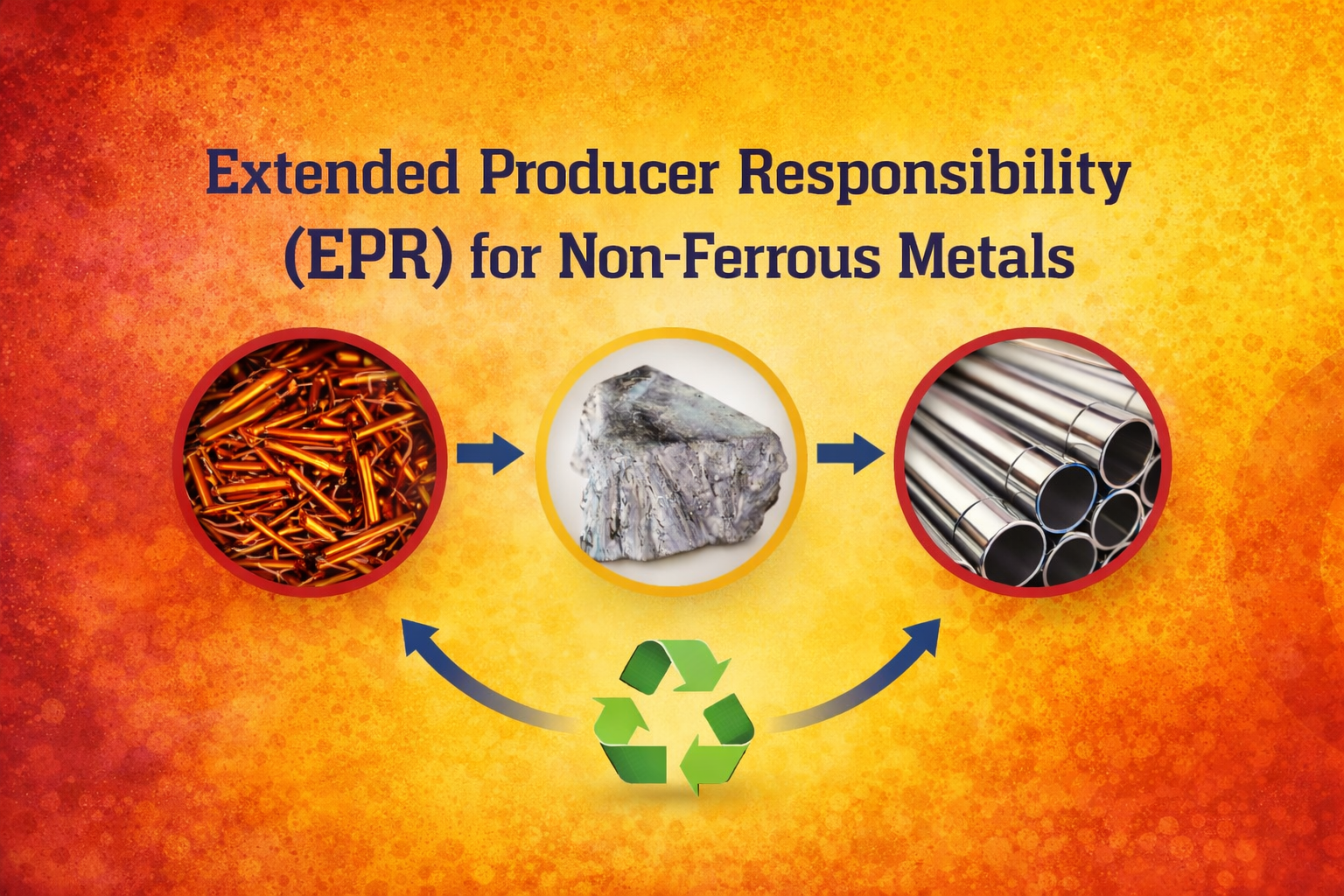
What is Non-Ferrous Metals Extended Producer Responsibi...
By Team Metacorp • Feb 24, 2026
What is Non-Ferrous Metals Extended Producer Responsibility (EPR) Framework?
Read More
What is Geographical Indication of Goods (GI) ?
By Team Metacorp • Jan 21, 2026
Understanding what is Geographical Indication of Goods (GI) ? How it is important for the businesses
Read More
How Proper Hazardous Waste Management Protects Your Bus...
By Team Metacorp • Jan 15, 2026
Proper Hazardous Waste Management helps businesses stay legally compliant, avoid penalties, and reduce the ris...
Read More