

Change of Land Use Advisory
Schedule a Callback
Enter your details and we’ll call you shortly.
Change of Land Use (CLU) Services
A Change of Land Use (CLU) Registration is an official document issued by a Government Authority that verifies the designated purpose or category of a specific parcel of land such as residential, commercial, industrial, agricultural, or institutional. It serves as legal proof of the approved use of the land in accordance with local zoning laws, planning regulations, and development norms.
A Change of Land Use (CLU) registration is a formal authorization from a local or State Authority that permits a landowner to legally change the designated purpose of a piece of land, such as converting agricultural land to residential or industrial use. To obtain a CLU permission, you must apply to the relevant authority, providing necessary documents, paying applicable fees, and complying with the conditions of the approval to ensure the land use aligns with the area's master plan and zoning regulations.
This CLU Registration is essential when applying for construction permissions, land conversion (e.g., agricultural to residential, bank loans against property, or while undertaking any development activity on the land. The registration ensures that the proposed or existing use of the land complies with the regulations laid down by the concerned municipal or development authority.
Benefits of Change of Land Use (CLU)
Banks and financial institutions prefer or mandate CLU-approved land for loans, project financing, and mortgages.
2. Submission of CLU Application
The landowner or authorized representative must submit a formal CLU application to the concerned authority, such as:
- Town & Country Planning Department
- Urban Development Authority
- District Collector or Revenue Department
3. Infrastructure and Utility Access
The government typically only extends urban infrastructure to areas with the correct land-use designation. Industrial-grade electricity and water connections.
- Sewage and waste management systems.
- Public road connectivity and official addresses.
- Zoning Check: Verify the land’s status in the current Master Plan. If the land is in a "Green Belt" or "Protected Zone," conversion is rarely allowed.
- Encumbrance Search: Ensure the property has a clear title and no pending legal disputes or unpaid taxes.
How to apply for Change of Land Use
The process begins with checking the local Master Plan / Development Plan / Zoning Regulations to confirm whether the proposed land use (Residential, Commercial, Industrial, Institutional, etc.) is permissible for the concerned land.
2. Review and Public Consultation
- Technical Report: DTP prepares layout feasibility report; forwards to Director/Commissioner with recommendations (within 14 days).
- Public Notice (15 days): Draft CLU publishes in official gazette/newspapers for objections.
Submission of Required Documents
- Proof of land ownership
- Site plan and location map
- Identity proof of the applicant
- Details of the proposed land use
After payment, the final CLU Certificate is issued digitally.
Mutation Update: The final—and most important—step is to ensure the Revenue Records (Jamabandi/Khatauni) are updated to reflect the new land use.
Documents Required for Change of Land Use (CLU) Application
- Aadhaar Card / PAN Card / Passport / Voter ID
- Address proof of the applicant
- Registered Sale Deed / Title DeedLocal Panchayat / Municipality
- If application is filed through an authorized representative
- Proof of payment of CLU charges / conversion fees
What You Get
- The CLU Registration issued by the Appropriate Govt. Authority
Common Questions
Frequently Asked Questions
The types of land use refer to the various ways in which land is utilized by humans and the natural environment. These classifications are important for urban planning, zoning, development, and resource management.
Major Types of Land Use:
1. Residential Land Use
• Used for housing and living purposes.
• Includes apartments, single-family homes, villas, housing societies, etc.
2. Commercial Land Use
• Used for business and commerce-related activities.
• Includes shops, malls, offices, hotels, restaurants, etc.
3. Industrial Land Use
• Land designated for manufacturing, processing, and production activities.
• Includes factories, warehouses, workshops, and logistics centers.
4. Agricultural Land Use
• Used for farming, livestock rearing, and cultivation of crops.
• Plays a vital role in food production and rural economies.
5. Forestry / Recreational / Green Land Use
• Reserved for forests, parks, open spaces, and recreational areas.
• Includes national parks, urban green belts, gardens, and conservation zones.
6. Institutional Land Use
• Land used for government, religious, health, or educational institutions.
• Includes schools, colleges, hospitals, police stations, and churches/temples.
A Change of Land Use (CLU) permission is required when a landowner wants to legally change the designated use of a piece of land from one category (e.g., agricultural) to another (e.g., residential, commercial, or industrial) as per the Government Zoning and Planning laws. The Change of Land Use permission is a critical instrument that ensures legal use of land, promotes systematic urban and rural development, and protects both public interest and private investment. Obtaining a CLU permission is not just a Regulatory formality but a vital step in ensuring that land development activities are lawful, sustainable, and aligned with regional planning goal.
The fees for obtaining a Change of Land Use (CLU) permission in India vary significantly depending on the State, District, and specific type of land use conversion. Here are some examples to highlight the variation:
State-Wise CLU Fee Examples
1. Lucknow (Uttar Pradesh)
• The CLU charges are approximately 30% of the total land cost.
2. Punjab (Patiala Urban Planning & Development Authority)
• Processing fee: ₹5,000 for the first acre, plus ₹1,000 for every additional acre.
3. Haryana
• Scrutiny fee: ₹10 per square meter of land applied.
• Lower fee (for industrial or recreational use): ₹2 per square meter.
4. West Bengal
Conversion charges vary by area type and land use (per decimal of land):
• Rural Areas (Agricultural land):
• To homestead: ₹20
• To commercial/industrial: ₹50
• Municipal Areas (Agricultural land): ₹75
5. Bihar
• The conversion fee is 10% of the land's market value.
6. Delhi
• Conversion fees range from ₹14,328 to ₹24,777 per square meter depending on location or zone
The documents required for applying for a Change of Land Use (CLU) permission can vary slightly depending on the state or local authority, but the core set of documents is generally the same across India.
Documents Required for CLU Application
1. Application Form
2. Proof of Land Ownership
3. Site Plan / Layout Plan
4. Location Map
5. Identity Proof of Applicant
6. Aadhar card, PAN card, passport, or voter ID
7. Affidavit / Declaration
8. Fire Department (for commercial/industrial use)
9. Pollution Control Board (for factories/industries)
10.Forest Department (if near protected areas)
11.Land Tax / Property Tax Receipts
12.Proof of up-to-date land or property tax payments
13.Fee Payment Receipt
14.Proof of payment of CLU application fees or scrutiny charges
Applying for a Change of Land Use (CLU) Permission is a legal process that allows landowners to convert land from one approved use (usually agricultural) to another (such as residential, commercial, or industrial), in accordance with the Master Plan or zoning regulations of the local authority.
Prepare Required Documents
• Ownership documents (sale deed, patta, mutation, etc.)
• Site plan & location map
• Zoning Plan (if available)
• ID proof
• Land tax receipts
• Affidavit declaring purpose of use
• Submit the Application
• Register/login
• Fill in the application form
• Upload scanned copies of documents
• Pay the scrutiny fee or processing fee online
• Submit the application
Quick Enquiry
Get in Touch
Call Us
+91-8076272381
Mon–Fri: 9:00 AM – 6:00 PM
Email Us
info@metacorp.in
We respond within 24 hours
Visit Us
2nd Floor, C-60, Sec-63,
Noida UP-201301
Business Hours
Request a Consultation
Latest Articles
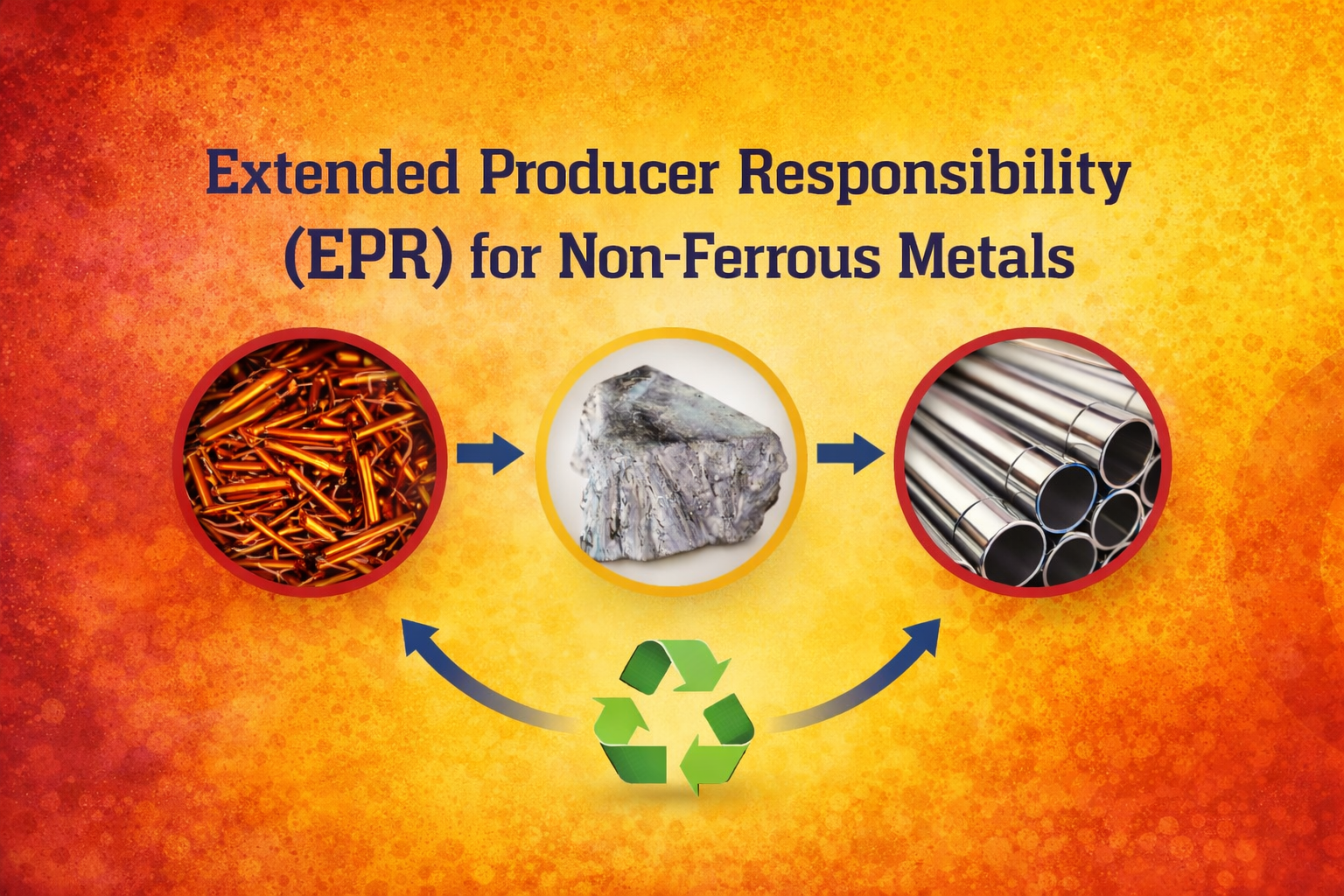
What is Non-Ferrous Metals Extended Producer Responsibi...
By Team Metacorp • Feb 24, 2026
What is Non-Ferrous Metals Extended Producer Responsibility (EPR) Framework?
Read More
What is Geographical Indication of Goods (GI) ?
By Team Metacorp • Jan 21, 2026
Understanding what is Geographical Indication of Goods (GI) ? How it is important for the businesses
Read More
How Proper Hazardous Waste Management Protects Your Bus...
By Team Metacorp • Jan 15, 2026
Proper Hazardous Waste Management helps businesses stay legally compliant, avoid penalties, and reduce the ris...
Read More