

ESG Reporting & Assurance Services
Schedule a Callback
Enter your details and we’ll call you shortly.
ESG Reporting & Assurance Services
What is ESG Assurance?
ESG assurance involves independent verification of a company’s ESG data, reporting processes, and performance metrics. The goal is to build trust and demonstrate that ESG claims are more than just “greenwashing” or PR tactics.
Assurance may be provided through:
- Third-party audits of ESG reports
- Verification of greenhouse gas (GHG) inventories
- Evaluation of sustainability KPIs
- Alignment checks with global frameworks like GRI, SASB, TCFD, CDP, and ISSB.
Why ESG Reporting Matters
In today’s business environment, sustainability is more than a trend—it's a strategic imperative. Stakeholders, investors, regulators, and customers expect organizations to act responsibly, disclose their environmental and social impact, and demonstrate sound governance practices. Transparent and standardized Environmental, Social, and Governance (ESG) reporting is now essential to win trust, secure capital, and ensure long-term business resilience.
Our ESG Reporting & Assurance Services help you design, implement, and independently validate sustainability disclosures aligned with leading international frameworks—positioning your organization as credible, future-ready, and compliant.
ESG Reporting Framework Alignment
We guide you in selecting and aligning with the most appropriate ESG standards based on your industry, geography, and stakeholder requirements, including:
- GRI (Global Reporting Initiative) – Comprehensive, stakeholder-driven disclosures
- SASB (Sustainability Accounting Standards Board) – Industry-specific, financially material ESG metrics
- TCFD (Task Force on Climate-related Financial Disclosures) – Climate risk and scenario reporting
- CDP (Carbon Disclosure Project) – Detailed environmental performance disclosures
- ISSB (International Sustainability Standards Board) – Global baseline for sustainability-related financial reporting
ESG Strategy & Materiality Assessment
We help you identify what matters most through stakeholder engagement, peer benchmarking, and regulatory mapping. Our process ensures your ESG strategy is built on material issues and measurable goals.
- Materiality mapping (double and dynamic)
- ESG vision and goal setting
- KPI identification and roadmap planning
Sustainability Report Development
We develop your ESG or sustainability report from start to finish—structured, data-driven, and aligned with applicable standards.
- Content development and layout design
- Data aggregation and KPI tracking
- GRI/SASB/TCFD/ISSB-compliant disclosures
- Multi-stakeholder reporting (investors, regulators, customers)
ESG Assurance & Independent Verification
To build confidence and credibility, we provide third-party assurance of your ESG disclosures in line with global audit protocols.
- Limited or reasonable assurance statements
- Gap analysis and audit readiness checks
- Third-party verification of GHG emissions, DEI metrics, supply chain performance, etc.
- Support for BRSR assurance (India), EU CSRD, and global regulatory filings
Key Benefits of Our ESG Reporting & Assurance Services
- Strengthen stakeholder and investor confidence
- Meet national and global regulatory compliance (BRSR, CSRD, SEC, etc.)
- Benchmark performance and identify ESG risks and opportunities
- Reduce reputational risk and avoid greenwashing
- Access ESG-linked financing and inclusion in sustainability indices
- Enhance transparency and trust through independently verified data
Benefits of ESG Reporting
- Ensures adherence to evolving disclosure requirements, including frameworks such as Business Responsibility and Sustainability Report and Global Reporting Initiative, thereby minimizing regulatory, legal, and reputational risks.
- Provides structured and reliable ESG data that supports informed management decisions, operational efficiency, and long-term value creation.
- Strengthens investor confidence by demonstrating transparency, accountability, and commitment to sustainable business practices.
- Enhances corporate credibility through transparent disclosures, fostering trust among customers, employees, regulators, and business partners.
- Facilitates early identification of environmental, social, and governance risks, enabling proactive management and protection of enterprise value.
- Encourages performance monitoring and continuous improvement, leading to cost optimization, process enhancement, and sustainable innovation.
ESG reporting is a strategic business tool that supports compliance, strengthens governance, enhances transparency, and drives sustainable long-term growth.
How to get ESG Certification
1. ESG Readiness Assessment & Gap Analysis
We begin with a detailed evaluation of your current ESG position.
- Review of existing environmental practices (energy use, emissions, waste, water management)
- Review of social practices (employee welfare, diversity, health & safety, CSR initiatives)
- Review of governance systems (board structure, ethics policies, compliance mechanisms)
- Global Reporting Initiative (GRI)
- Sustainability Accounting Standards Board (SASB)
- Task Force on Climate-related Financial Disclosures (TCFD)
- Business Responsibility and Sustainability Report (BRSR – mandated by SEBI for listed entities in India)
2. ESG Strategy & Governance Framework
After identifying gaps, we develop a structured ESG strategy tailored to your organization.
- Defining ESG vision and sustainability objectives
- Setting measurable Key Performance Indicators (KPIs)
- Climate risk assessment (physical and transition risks)
- Carbon footprint baseline calculation
- ESG governance structure (Board oversight, ESG committee, reporting lines)
- ESG Policy
- Code of Conduct
- Risk Management Policy
- CSR Policy
- Anti-Bribery & Ethics Policy
3. ESG Data Collection & Monitoring System
Reliable data is the foundation of credible ESG reporting.
- We help you establish structured data management systems by:
- Identifying ESG metrics relevant to your sector
- Assigning department-wise data responsibility
- Creating standard operating procedures (SOPs) for data collection
- Setting up tracking formats for energy, emissions, waste, workforce, governance data
- Implementing internal controls for data accuracy and consistency
- Periodic review and validation mechanisms
How to do documentation for ESG
1. Policy & Governance Documentation
We prepare and organize:
- ESG framework documentation
- Governance charters and committee mandates
- Risk registers and compliance tracking systems
- Ethical and supplier compliance documentation
ESG Reporting Documentation
We compile and structure all relevant data required for reporting, including:
- Environmental data (energy consumption, GHG emissions, water usage, waste management)
- Social data (employee strength, diversity metrics, training hours, safety records, CSR expenditure)
- Governance data (board composition, compliance systems, ethics reporting)
- Carbon emission calculations and supporting worksheets
- Evidence files and working papers
Assurance Documentation
- To prepare your organization for third-party verification, we ensure:
- Proper maintenance of supporting documents
- Internal control documentation
- Management representations
- Corrective action documentation
What You Get
1. ESG Diagnostic & Gap Assessment Report
- A structured report highlighting your current ESG status, risk areas, and improvement plan.
- A detailed roadmap with measurable KPIs and governance structure.
- A professionally drafted ESG Report aligned with GRI, SASB, TCFD, or BRSR requirements.
- End-to-end assistance in preparing and submitting Business Responsibility and Sustainability Reports.
- Independent Limited or Reasonable Assurance statement to enhance transparency and investor trust.
Common Questions
Frequently Asked Questions
ESG reporting involves disclosing an organization’s performance across Environmental, Social, and Governance factors. It allows stakeholders—such as investors, regulators, customers, and employees—to assess how responsibly and sustainably a business operates. It is increasingly important for building trust, ensuring regulatory compliance, mitigating risks, and accessing ESG-linked investment opportunities.
Yes, in many regions. For example, India mandates BRSR for top 1,000 listed companies. ESG disclosures are also essential for investor readiness and global supply chains.
Assurance is third-party verification of ESG data, enhancing credibility, avoiding greenwashing, and meeting regulatory and investor expectations.
We help you align with frameworks like GRI, SASB, TCFD, CDP, ISSB, and BRSR (India-specific), based on your industry and stakeholder needs.
Quick Enquiry
Get in Touch
Call Us
+91-8076272381
Mon–Fri: 9:00 AM – 6:00 PM
Email Us
info@metacorp.in
We respond within 24 hours
Visit Us
2nd Floor, C-60, Sec-63,
Noida UP-201301
Business Hours
Request a Consultation
Latest Articles
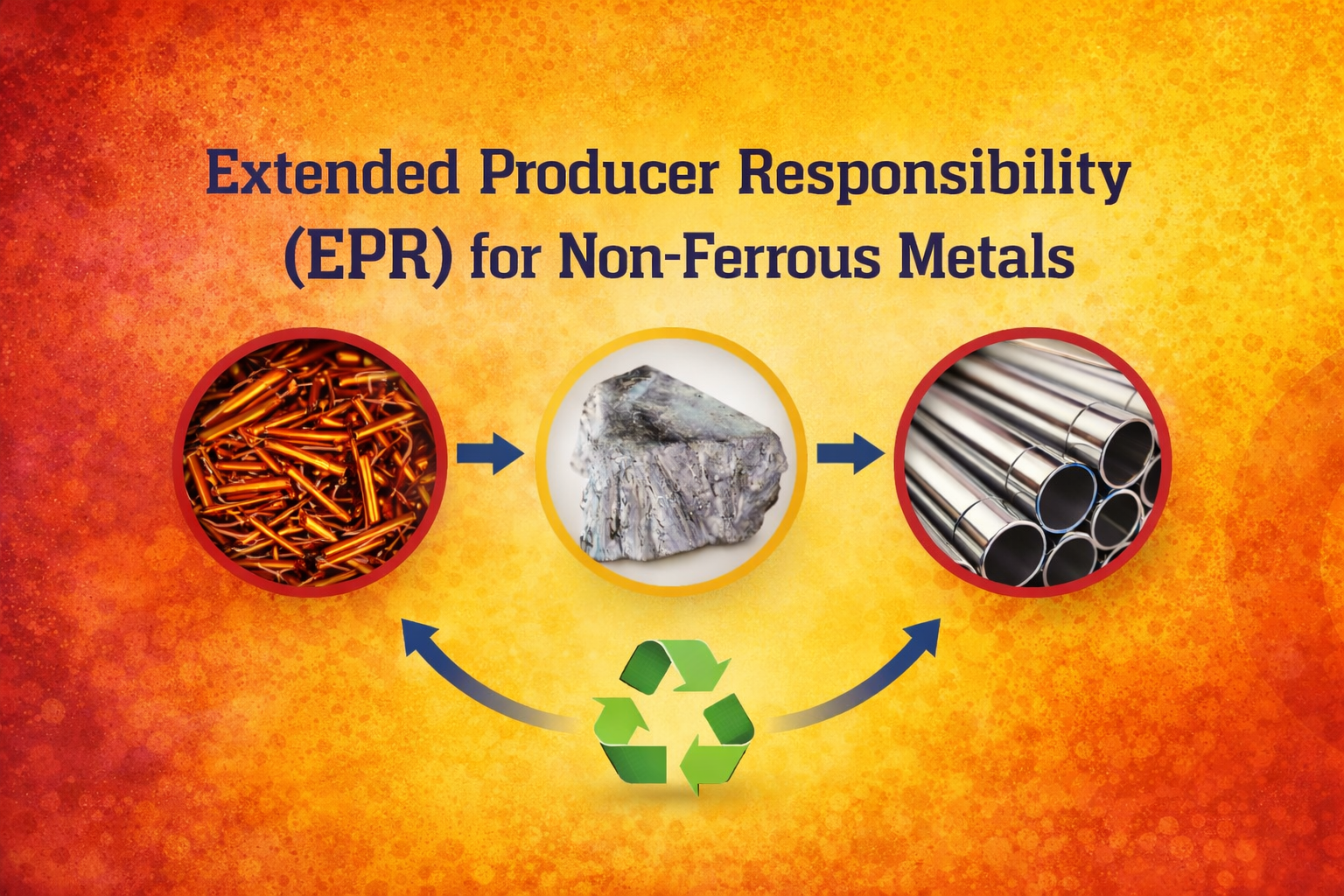
What is Non-Ferrous Metals Extended Producer Responsibi...
By Team Metacorp • Feb 24, 2026
What is Non-Ferrous Metals Extended Producer Responsibility (EPR) Framework?
Read More
What is Geographical Indication of Goods (GI) ?
By Team Metacorp • Jan 21, 2026
Understanding what is Geographical Indication of Goods (GI) ? How it is important for the businesses
Read More
How Proper Hazardous Waste Management Protects Your Bus...
By Team Metacorp • Jan 15, 2026
Proper Hazardous Waste Management helps businesses stay legally compliant, avoid penalties, and reduce the ris...
Read More