

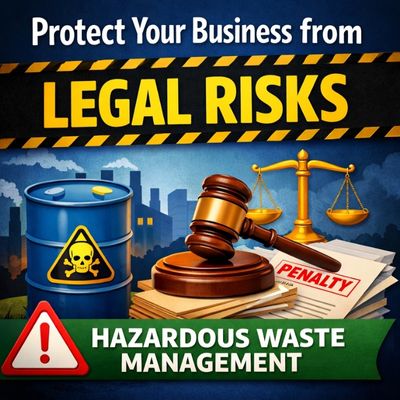
How Proper Hazardous Waste Management Protects Your Business from Legal Risks
By Team Metacorp
Legal & Compliance Experts
In today’s highly regulated business environment, Hazardous Waste Management is no longer just an environmental responsibility—it is a legal necessity. Businesses across manufacturing, pharmaceuticals, chemicals, healthcare, and infrastructure sectors are required to follow strict rules for handling, storing, transporting, and disposing of hazardous waste. Failure to comply can lead to severe legal consequences, financial penalties, and long-term damage to business credibility.
This article explains how proper Hazardous Waste Management helps protect businesses from legal risks while ensuring sustainable and compliant operations.
Understanding Hazardous Waste Management
Hazardous Waste Management refers to the systematic process of identifying, collecting, storing, treating, transporting, and disposing of waste that poses risks to human health and the environment. Such waste may be flammable, toxic, corrosive, or reactive in nature.
Common sources of hazardous waste include:
- Chemical manufacturing units
- Pharmaceutical industries
- Automotive and metal processing units
- Healthcare and laboratory facilities
- Construction and infrastructure projects
Regulatory authorities closely monitor these sectors due to the potential environmental and public health risks involved.
Legal Risks Associated with Poor Hazardous Waste Management
Improper Hazardous Waste Management can expose businesses to multiple legal risks, including:
1. Heavy Financial Penalties
Non-compliance with hazardous waste regulations can result in substantial fines imposed by pollution control authorities. Repeat violations may lead to escalating penalties and additional compliance costs.
2. Suspension or Cancellation of Licenses
Regulatory bodies have the authority to suspend or cancel business licenses if hazardous waste is mishandled. This can lead to operational shutdowns and significant revenue losses.
3. Criminal Liability
In serious cases involving environmental damage or public health hazards, business owners and senior management may face criminal charges under environmental protection laws.
4. Legal Notices and Litigation
Improper disposal or leakage of hazardous waste can lead to legal action from regulators, affected communities, or environmental organizations.
How Proper Hazardous Waste Management Reduces Legal Exposure
1. Ensures Regulatory Compliance
Effective Hazardous Waste Management ensures compliance with national and state-level environmental laws, including waste authorization, reporting, and disposal requirements. Staying compliant minimizes the risk of inspections turning into enforcement actions.
2. Improves Documentation and Traceability
Maintaining accurate records such as waste manifests, storage logs, and disposal certificates provides legal proof of compliance. Proper documentation is critical during audits, inspections, and legal reviews.
3. Reduces Risk of Environmental Incidents
Spills, leaks, and improper storage of hazardous waste can trigger immediate legal action. A structured Hazardous Waste Management system significantly reduces the likelihood of such incidents.
4. Protects Management from Personal Liability
When businesses follow approved waste management procedures, liability risks for directors and compliance officers are reduced. Demonstrating due diligence is a key legal defense.
Role of Hazardous Waste Management in Business Audits & Inspections
Regulatory inspections often focus heavily on Hazardous Waste Management practices. Auditors typically check:
- Valid hazardous waste authorization
- Proper labeling and storage
- Approved waste transporters and disposal facilities
- Compliance with annual returns and reporting
Businesses with strong compliance frameworks face fewer disruptions during inspections and audits.
Long-Term Legal & Business Benefits
Beyond immediate legal protection, proper Hazardous Waste Management offers long-term advantages:
- Enhanced business credibility with regulators
- Easier approvals for expansion and new projects
- Stronger ESG and sustainability credentials
- Reduced risk of legal disputes and compliance delays
Investors, partners, and clients increasingly evaluate environmental compliance before engaging with businesses.
Conclusion
Proper Hazardous Waste Management is one of the most effective ways to safeguard your business from legal risks. By ensuring regulatory compliance, maintaining accurate documentation, and adopting safe disposal practices, businesses can avoid penalties, operational disruptions, and reputational damage.
In an era of stricter environmental enforcement, investing in structured Hazardous Waste Management is not just about compliance—it is about protecting the long-term stability and growth of your business.
To learn more about Hazardous Waste Management in Haryana, Gujarat, Maharashtra and Uttar Pradesh we recommend you to visit Metacorp as it solve legal and compliance issues of new and established businesses.