

Non-Ferrous Metals EPR Registration
Schedule a Callback
Enter your details and we’ll call you shortly.
Non-Ferrous Metals EPR Registration
Introduction
- The Non-Ferrous Metals Extended Producer Responsibility (EPR) Framework introduced through the Hazardous and Other Wastes (Management and Transboundary Movement) Amendment Rules, 2025 represents a major regulatory shift in India’s resource management regime. The framework, notified by the Ministry of Environment, Forest and Climate Change with centralized digital oversight by the Central Pollution Control Board, extends statutory EPR obligations to key non-ferrous metals.
- Effective 1 April 2026, the framework moves beyond traditional waste disposal toward a life-cycle, circular economy–based regulatory approach, mandating collection, recycling, refurbishment, and environmentally sound end-of-life management of covered metal
I. Statutory Basis & Regulatory Architecture
The EPR framework is grounded in delegated environmental legislation under the Environment (Protection) Act, 1986. By incorporating non-ferrous metals within the ambit of hazardous and other waste management rules, the Government has elevated metal recovery from a policy preference to a statutory compliance obligation.Key Legal Characteristics
1. Mandatory Registration Regime
No entity can operate within the regulated value chain without prior registration on the CPCB portal. This transforms EPR compliance into a condition precedent for lawful business operations.
2. Prohibition-Based Enforcement Model
The Rules expressly prohibit:
- Operating without registration
- Engaging in commercial transactions with unregistered entities
- Furnishing inaccurate data or misreporting quantities
All transactions, certificate generation, adjustments, and reporting must occur through the CPCB online system, creating a traceable compliance ecosystem.
II. Scope of Regulatory Coverage
The framework applies to:- Aluminium
- Copper
- Zinc
- All respective alloys
- Primary metal manufacturers
- Alloy manufacturers
- Producers placing metal-containing products on the market
- Importers of metals, scrap, or used products
- Manufacturers consuming covered metals
- Recyclers and refurbishers
- Collection agents
III. Recycling Targets & Legal Obligation Structure
Recycling targets prescribed under Schedule XI are progressive and legally binding:| Period | Recycling Obligation |
|---|---|
| FY 2026 - 2028 | 10 % |
| FY 2028 - 2030 | 30 % |
| FY 2030 - 2032 | 50 % |
| FY 2033 onwards | 75 % |
Special Compliance Clause
Imported scrap and used products attract 100% EPR liability, meaning full recovery responsibility rests with the importer.
IV. EPR Certificate Mechanism
The framework introduces a regulated certificate-based compliance model specific to non-ferrous metals:- Recyclers generate EPR certificates based on verified recycling output
- Obligated entities procure certificates to meet recycling targets
- Certificates are metal-specific and governed by CPCB conversion factors and reconciliation rules
- Certificates function as legally recognized compliance instruments within a digitally monitored marketplace.
- Refurbishment is recognized as a circular pathway within the non-ferrous metal lifecycle:
- Certified refurbishment extends product life
- EPR liability is deferred during extended use
- 75% liability is reintroduced when the refurbished product re-enters the waste stream
Benefits of Non-Ferrous Metals EPR Registration
- Ensures full compliance with statutory EPR obligations, reducing exposure to penalties, notices, and regulatory action.
- Creates a structured and traceable system for channelizing non-ferrous metal scrap through authorized recyclers.
- Establishes measurable tracking of quantities placed in the market versus recycled, strengthening internal compliance systems.
- Supports circular economy practices and strengthens ESG reporting and sustainability disclosures.
EPR Registration & Compliance Process – Non-Ferrous Metals
- Determine whether the entity qualifies as a Producer, Importer, or Brand Owner.
- Assess total quantity of non-ferrous metals placed in the market (production/import).
- Identify applicable EPR targets as per notified percentage obligations.
- Compile production, import, and sales data for the previous financial year.
- Identify metal composition (aluminium, copper, zinc, lead, etc.).
- Calculate annual EPR liability based on prescribed target percentages.
- Prepare the EPR Action Plan outlining waste collection and recycling strategy.
- Create login and submit EPR application on the CPCB EPR portal.
- Upload statutory documents and operational details.
- Submit EPR Action Plan and recycler agreements.
- Respond to CPCB queries or clarification requests, if any.
- Obtain EPR Registration Certificate upon approval.
Documents required for Non-Ferrous Metals EPR Registration
- Company PAN & GST Certificate
- Certificate of Incorporation / Partnership Deed
- Authorized Signatory Details & Board Resolution
- Import Export Code (if applicable)
- Product details with metal composition
- Sales data (previous financial year)
- Estimated quantity placed in market
- Agreement / MoU with authorized recyclers
- EPR Action Plan
- Waste channelization mechanism details
- Consent to Establish (CTE) & Consent to Operate (CTO)
- Authorization under Hazardous Waste Rules
- Factory License
- Pollution control system details
- Installed recycling capacity certificate
- Process flow diagram
- Annual returns and production records
Deliverables – Non-Ferrous Metals EPR
1. Regulatory Registration Deliverables
Applicability Assessment Report- Detailed evaluation of EPR liability based on production/import volume and metal category.
- Metal-wise obligation calculation aligned with notified percentage targets.
- Structured roadmap outlining collection mechanism, channelization strategy, recycler tie-ups, and compliance timeline.
- Compilation, verification, and submission of all statutory and technical documents on the CPCB portal.
- Recycler Identification & Due Diligence Support
- Verification of authorized recyclers’ licenses, capacity, and compliance status.
- Legally structured agreements ensuring traceability and regulatory alignment.
- Documented reverse logistics and material tracking mechanism.
- Annual timeline of reporting obligations, target deadlines, and documentation milestones.
Common Questions
Frequently Asked Questions
The Non-Ferrous Metals EPR Framework is a statutory compliance regime introduced under the Hazardous and Other Wastes (Management and Transboundary Movement) Amendment Rules, 2025. It extends Extended Producer Responsibility (EPR) obligations to aluminium, copper, zinc, and their alloys, requiring regulated entities to ensure environmentally sound collection, recycling, and end-of-life management of these metals.
The Rules come into force on 1 April 2026. The period prior to implementation functions as a transition phase, enabling regulated entities to establish registration, compliance systems, and recycling arrangements.
Mandatory compliance applies to:
- Producers and brand owners
- Importers of non-ferrous metals, alloys, scrap, and used products
- Manufacturers using covered metals
- Collection agents
- Refurbishers
- Recyclers
All such entities must register on the CPCB online portal.
Yes. Registration with the Central Pollution Control Board (CPCB) is mandatory. The Rules expressly prohibit:
- Operating without valid registration
- Engaging in commercial transactions with unregistered entities
Non-registration may lead to suspension of operations and enforcement action.
This phased approach allows gradual capacity building while ensuring long-term circularity.
Quick Enquiry
Get in Touch
Call Us
+91-8076272381
Mon–Fri: 9:00 AM – 6:00 PM
Email Us
info@metacorp.in
We respond within 24 hours
Visit Us
2nd Floor, C-60, Sec-63,
Noida UP-201301
Business Hours
Request a Consultation
Latest Articles
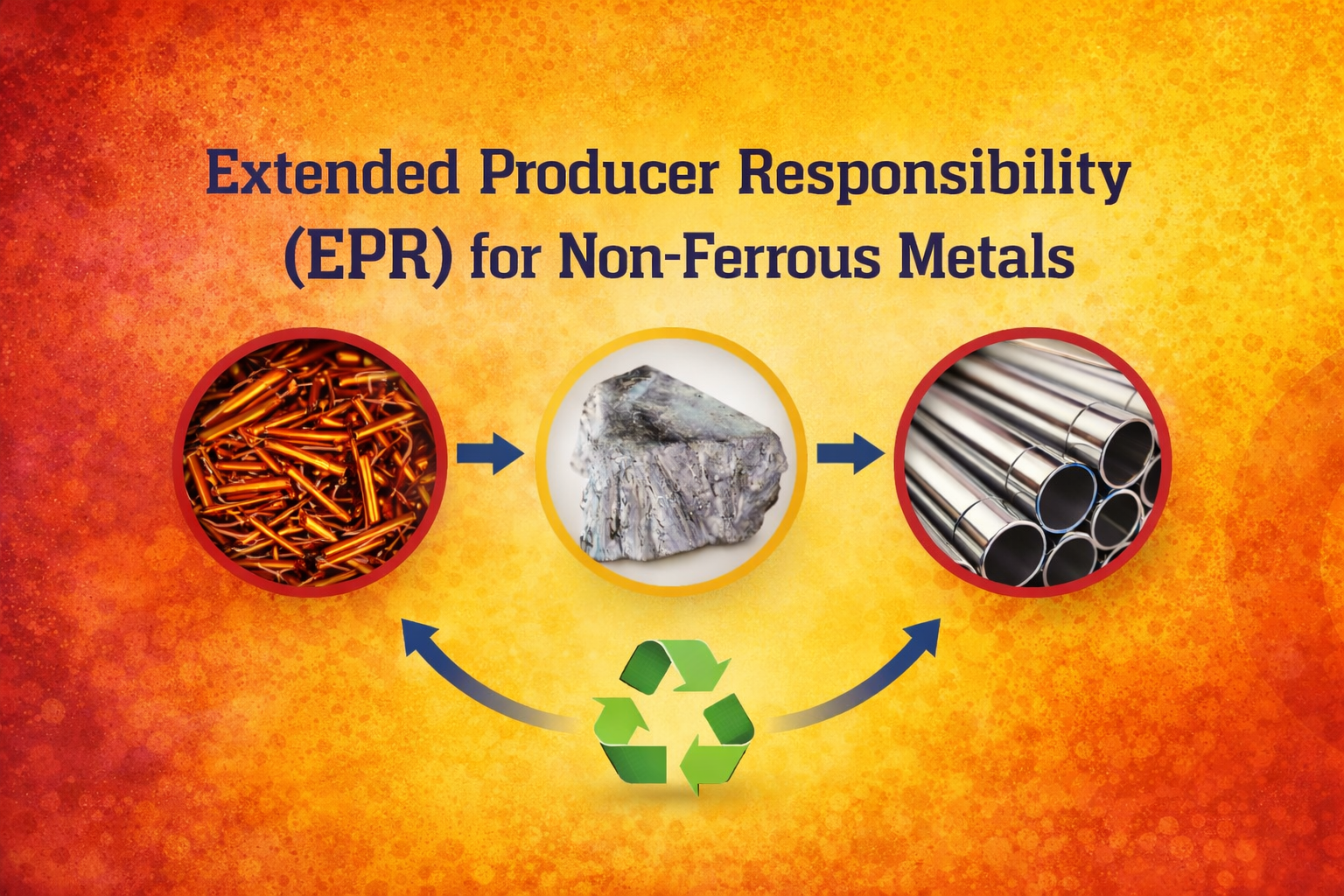
What is Non-Ferrous Metals Extended Producer Responsibi...
By Team Metacorp • Feb 24, 2026
What is Non-Ferrous Metals Extended Producer Responsibility (EPR) Framework?
Read More
What is Geographical Indication of Goods (GI) ?
By Team Metacorp • Jan 21, 2026
Understanding what is Geographical Indication of Goods (GI) ? How it is important for the businesses
Read More
How Proper Hazardous Waste Management Protects Your Bus...
By Team Metacorp • Jan 15, 2026
Proper Hazardous Waste Management helps businesses stay legally compliant, avoid penalties, and reduce the ris...
Read More