

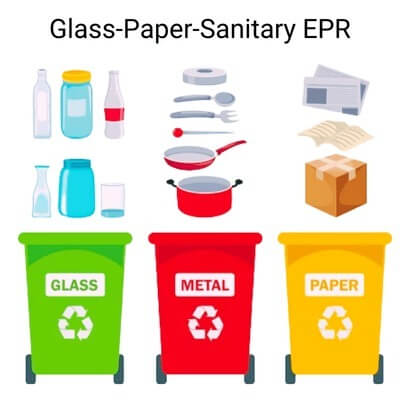
EPR certification for Paper, glass, metal and sanitary ware items
By Team Metacorp
Legal & Compliance Experts
Extended Producer Responsibility (EPR) has emerged as a crucial policy tool to tackle environmental challenges. With rapid industrialization and increasing consumerism, the burden of waste management has shifted towards producers, making them accountable for the lifecycle of their products and packaging.
The latest EPR draft rules for paper, glass, metal, and sanitary products in India, set to come into effect from April 1, 2026, aim to create a structured and efficient waste management system. These regulations promote a circular economy, ensuring that materials are continuously reused, reducing the strain on natural resources, and minimizing environmental pollution.
What is Extended Producer Responsibility (EPR)?
EPR is a policy framework where manufacturers, importers, and brand owners are held responsible for managing the end-of-life disposal of their products. This includes collection, recycling, and final disposal, ensuring minimal environmental impact and efficient resource utilization. The principle behind EPR is that producers should bear the cost and responsibility of waste management rather than shifting the burden to consumers or municipal authorities.
Scope of the New EPR Rules
The EPR rules for packaging materials cover the following stakeholders:
- Producers: Companies that manufacture or introduce packaging made of paper, glass, metal, and sanitary products.
- Importers: Entities bringing such packaging materials into India.
- Brand Owners: Companies using these materials for product packaging.
- Waste Processors: Organizations handling waste collection, recycling, and safe disposal.
Role of CPCB and SPCB in EPR Implementation
When it comes to enforcing and monitoring EPR compliance, the Central Pollution Control Board (CPCB) and State Pollution Control Boards (SPCBs) play key roles in ensuring a smooth and efficient waste management system.
CPCB: The National Regulator
The CPCB acts as the primary regulatory authority for overseeing EPR at the national level. Its responsibilities include:
- Managing the Centralized Online EPR Portal, a platform where producers, importers, and brand owners (PIBOs) must register and report their waste management efforts.
- Ensuring Compliance by verifying that companies meet their waste collection and recycling targets.
- Issuing Environmental Compensation (EC) Penalties to companies failing to meet their obligations.
- Conducting Audits and Inspections to validate the claims of recyclers and producers regarding waste processing.
- Developing Guidelines and Regulations to streamline EPR implementation and ensure uniformity across states.
SPCB: The State-Level Enforcer
The SPCBs operate at the state level, ensuring that businesses comply with EPR mandates within their jurisdictions. Their duties include:
- Enforcing EPR Guidelines Locally, ensuring that industries comply with national regulations at the grassroots level.
- Coordinating with Local Recyclers and Waste Processors to facilitate the proper handling and recycling of waste materials.
- Conducting Routine Inspections to monitor compliance and address violations effectively.
- Managing Grievance Redressal Mechanisms to address concerns related to EPR violations or inefficiencies.
Both CPCB and SPCBs/PCCs are integral to ensuring that PIBOs fulfill their EPR obligations, thereby promoting a cleaner environment and encouraging responsible waste disposal practices across the country.
Recycling Targets for Different Packaging Materials
To ensure effective recycling and minimize landfill waste, the government has proposed ambitious targets:
Paper Packaging
- 2026-27: 40% recycled content
- 2027-28: 50% recycled content
- 2028-29: 60% recycled content
- 2029-30: 70% recycled content
Glass Packaging
- 2026-27: 50% recycled content
- 2027-28: 60% recycled content
- 2028-29: 70% recycled content
- 2029-30: 80% recycled content
Metal Packaging
- 2026-27: 20% recycled content
- 2027-28: 30% recycled content
- 2028-29: 40% recycled content
- 2029-30: 50% recycled content
Sanitary Products
- 2026-27: 60% recycling
- 2027-28: 70% recycling
- 2028-29: 80% recycling
- 2029-30: 100% recycling
Sanitary Waste Management: A Critical Addition
Sanitary waste, including disposable diapers, sanitary pads, and hygiene products, poses a significant challenge due to its non-biodegradable nature. Under the new rules:
- Producers must procure EPR certificates from authorized incinerators to meet recycling targets.
- Incineration facilities must be registered for safe disposal.
- Consumer awareness campaigns must be initiated to educate the public on the correct disposal methods.
Benefits of EPR Regulations
The implementation of EPR for paper, glass, metal, and sanitary products brings several advantages:
1. Promotes Circular Economy: Encourages the use of recycled materials, reducing dependency on virgin resources.
2. Reduces Environmental Impact: Minimizes waste accumulation in landfills and promotes sustainable disposal practices.
3. Encourages Corporate Responsibility: Ensures companies take responsibility for their packaging waste, driving sustainability initiatives.
4. Boosts Recycling Industry: Provides growth opportunities for waste management and recycling businesses.
5. Creates Green Jobs: Expansion in the recycling sector results in new employment opportunities in waste collection, sorting, and processing.
6. Enhances Consumer Awareness: Encourages responsible consumption and waste segregation at the source.
Fulfillment of EPR Obligations
To successfully meet EPR requirements, stakeholders must undertake the following steps:
1. Registration on the EPR Portal: All producers, importers, and brand owners must register with CPCB.
2. Annual Compliance Reporting: Submit detailed reports on waste generation, collection, and recycling progress.
3. Procurement of EPR Certificates: Ensure that waste processing is handled by certified recyclers and disposal units.
4. Collaboration with Waste Management Partners: Work with recyclers, PROs (Producer Responsibility Organizations), and municipal bodies to manage waste efficiently.
5. Consumer Awareness Initiatives: Educate consumers on responsible waste disposal and promote sustainable consumption.
EPR Compliance with a Centralized Online Portal
The implementation of Extended Producer Responsibility (EPR) is set to become more streamlined with the introduction of a centralized online portal. This digital system will serve as a one-stop platform for the registration of PIBOs (Producers, Importers, and Brand Owners) and waste processors, ensuring transparency in tracking the material balance of packaging and sanitary products introduced into the market. Additionally, it will facilitate the auditing of PIBOs, recyclers, and waste processors, making compliance more efficient. The portal will also enable the generation and exchange of EPR certificates, supporting the seamless execution of EPR obligations across various packaging materials, including plastic, glass, metal, paper, and sanitary products. State Pollution Control Boards (SPCBs) and Pollution Control Committees (PCCs) will also utilize this system for regulatory oversight. Until the portal is fully operational, all EPR-related activities will be managed offline, ensuring continuity in the implementation process. This initiative marks a significant step toward responsible waste management and sustainable packaging practices.
Conclusion
The new EPR regulations for paper, glass, metal, and sanitary products represent a major step in India's waste management strategy. By holding producers, importers, and brand owners responsible for their products’ disposal, the rules promote recycling, reduce pollution, and encourage sustainable resource use. The set recycling targets for each material ensure efficient waste management, while the CPCB, SPCBs, and a centralized online portal will streamline compliance and transparency. This initiative will not only help create a cleaner environment but also foster growth in the recycling industry and promote responsible consumer behavior, leading to a more sustainable future.
For more details about EPR certifications, Please visit CPCB EPR Certifications